For those who have travelled with me, you know I have a particular interest in learning a little about the places we visit through their language. To those we meet along the way who are well trained in English this is somewhat annoying with a limited vocabulary and butchering of their native tongue. However at times it is useful to minimally communicate as not everyone in the world learns English – shocking revelation I know.
Some of my observations and learnings from this trip …
#1 … Life Guard
Life Guard (US English) – A person who is dedicated to life saving heroism. It even sounds inspiring or maybe I watched too much Baywatch growing up?
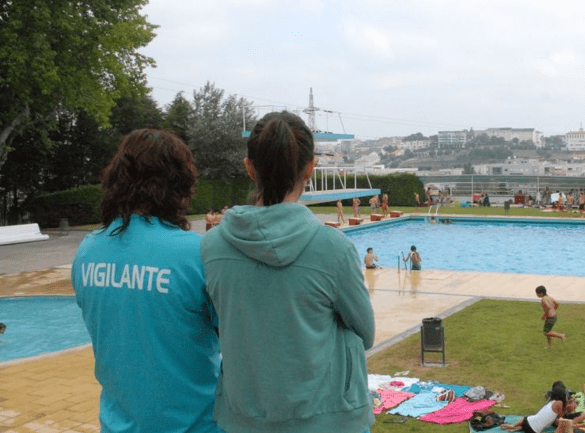
Vigilante (Portugese) – Revenge at the beach? Actually the focus is on being watchful or in the case of the Vigilante at our apt. in Alvor – the guy who ruins all fun at the pool ensuring the rules are followed
Badmeister (Swiss German) – These other cultures don’t value heroism as much as they value control and to be clear this guy is the bad ass master of the pool.
#2 … Thank You
Latin languages love their feminine and masculine adjectives which lead to male and female articles for “the” and “a”, we’re all used to and sometimes tripped up by this. However when saying a Thank You in Portuguese the form depends on the gender of the speaker, I can’t think of any other Latin language that does this. In Thailand I remember adding a kah or kop at the end of many phrases depending on the speakers gender. Can anyone think of other examples?
#3 … Counting with or without the math lesson
The French are unique in turning the count from one to a hundred into a Math lesson since they don’t have unique words for the tens past sixty, you get sixty + ten then four x twenty and eventually four x twenty + ten. Luckily the Swiss remedy this and created a few new words for seventy, eighty and ninety. This fun fact was discovered while waiting for the kids food at a McDonalds and being confused when i heard them call for order number “huitante-huit”.
 Forell Family Travels
Leave a comment